
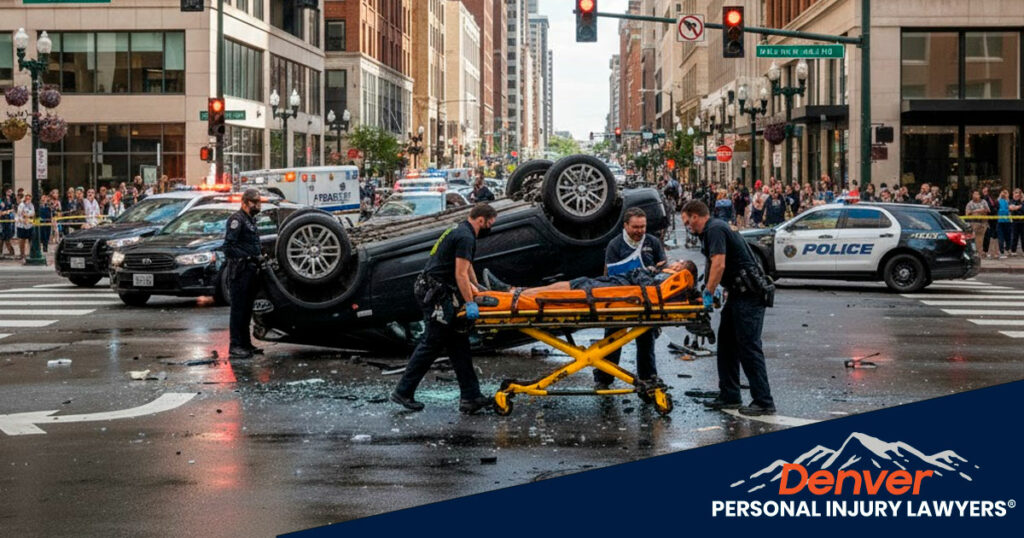
SUV rollover accidents in Denver are a serious safety issue on Colorado’s difficult roads. These violent crashes happen when vehicles tip onto their side or roof, usually because of the combination of Denver’s hilly landscape, unpredictable weather, and busy highways like I-25 and I-70. According to the National Highway Traffic Safety Administration’s Fatality Analysis Reporting System (FARS), 12.8% of all fatal crashes in Colorado in 2022 involved a rollover as the first harmful event, which is a significant share when compared with many other states. Victims suffer from severe brain injuries, spinal cord damage, and life-changing disabilities. Knowing how to prevent SUV rollovers on the roads in Denver is not just a good idea, as it’s crucial for keeping yourself and your passengers safe from these terrible incidents.
Table of Contents
ToggleCommon Causes of SUV Rollover Accidents in Denver
Understanding the causes of SUV rollovers in Denver starts with examining driver behavior. Reckless driving, excessive speeds, driving under the influence, and distracted driving create dangerous conditions that can quickly destabilize an SUV. When drivers overcorrect after drifting onto soft shoulders or make sudden steering maneuvers to avoid obstacles, they set the stage for catastrophic rollovers.
Vehicle design defects play an equally critical role. High center of gravity vehicles like SUVs naturally carry more weight above the road surface, making them inherently unstable during sharp turns or evasive maneuvers. This design characteristic means SUVs require different handling than sedans or lower-profile vehicles.
Mechanical failures compound these risks significantly:
- Tire blowouts strip drivers of control, particularly at highway speeds or on rough terrain.
- Brake system failures prevent proper deceleration during turns or descents.
- Suspension problems compromise vehicle stability on uneven surfaces.
Denver’s unique environment adds another layer of danger. Mountain passes demand constant elevation changes. Sudden storms transform roads without warning. Steep grades and sharp curves on routes like I-70 test vehicle stability limits daily.
Road Conditions That Can Lead to SUV Rollover Accidents in Denver
Denver’s road network has specific dangers that significantly increase the risk of rollover accidents for SUV drivers. Here are some key areas where these risks are particularly high:
Highways with Dangerous Terrain
I-25 and I-70 are consistently ranked as two of the most dangerous highways for rollover crashes. This is especially true in sections where these highways go through mountainous regions with steep slopes and sharp turns.
Curved Sections on US 36
The US 36 highway between Denver and Boulder has high-speed traffic combined with curved parts that can challenge the stability of vehicles, including SUVs.
Urban Rollover Risks on Colfax Avenue
Even in urban areas, such as Colfax Avenue, there are risks of rollover accidents at busy intersections where side-impact collisions can occur.
The Deadly Combination of Sharp Curves and Narrow Gravel Edges
On Colorado highways, sharp curves combined with narrow gravel edges create a dangerous situation. When drivers accidentally drift out of their lane, the soft shoulders provide insufficient support, causing the tires to catch and triggering rollovers.
Undivided Roads Without Center Barriers
In rural areas surrounding Denver, undivided two-way roads without center barriers are responsible for most fatal rollover crashes. These roads usually have higher speed limits, leaving drivers with less time to react when they come across uneven pavement, potholes, or debris on the road that can destabilize an SUV’s already elevated center of gravity.
Essential Tips to Prevent SUV Rollover Accidents on Denver Roads
Understanding how to prevent SUV rollovers in Denver starts with mastering three critical safety practices.
Avoid Sudden Steering Movements
Jerking the wheel or overcorrecting during lane changes triggers untripped rollovers, which are the deadliest type. When your SUV begins to drift, resist the urge to yank the steering wheel. Make gradual, controlled adjustments instead. This single habit prevents the violent weight shift that causes your vehicle to tip.
Maintain Your Tires Religiously
Check tire pressure monthly and inspect tread depth before long trips. Underinflated tires generate excessive heat on Colorado highways, leading to catastrophic blowouts. Replace tires when tread depth falls below 4/32 of an inch. Worn tires lose grip on wet mountain roads, increasing your rollover risk exponentially.
Reduce Speed on Curves and Ramps
Highway ramps and curved sections near Denver demand reduced speeds. Posted speed limits assume ideal conditions, such as dry pavement and standard vehicles. Your SUV’s high center of gravity requires you to slow down 5-10 mph below the posted limit on curves, especially on I-70 mountain passes and I-25 interchange ramps.
Safety Features for SUV Rollover Prevention in Denver
Electronic Stability Control (ESC) is your best defense against rollover crashes. This system detects when your SUV starts to skid or lose traction, automatically applying brakes to individual wheels and reducing engine power to keep your vehicle stable. ESC technology has proven to reduce single-vehicle rollover crashes by up to 75% in SUVs, which is a critical advantage on Denver’s challenging mountain passes and sudden weather conditions.
Modern SUVs offer vehicle safety features for preventing SUV rollovers in Denver that go beyond basic stability control:
- Lane departure warning systems alert you when drifting from your lane, preventing overcorrection maneuvers that trigger untripped rollovers.
- Fatigue detection technology monitors your driving patterns and warns you to take breaks during long mountain drives.
- Adaptive cruise control maintains safe speeds on winding Colorado highways.
- Blind spot monitoring reduces the need for sudden swerving to avoid unseen vehicles.
When buying or leasing an SUV for driving in Denver, make sure these technologies are active and working. Check the NHTSA recall website regularly to ensure your vehicle’s safety systems haven’t been flagged for defects or required updates.
Proper Load Distribution and Driving Habits to Lower SUV Rollover Risk
Load distribution for preventing SUV rollovers in Denver starts with understanding how cargo placement affects your vehicle’s stability. Place heavier items low and centered in your cargo area, and never on the roof rack where they raise the center of gravity dangerously high. An unevenly loaded SUV becomes unpredictable during turns, particularly on Denver’s mountainous roads where elevation changes demand constant vehicle adjustments.
Your driving habits matter just as much as what you load. Stay focused behind the wheel without phone distractions or other diversions that split your attention. Obey posted speed limits, especially on challenging terrain like I-70’s mountain passes or the sharp curves along US 36. Avoid sudden steering inputs that can trigger an untripped rollover. When navigating Denver’s diverse road conditions, from urban intersections to rural highways, defensive driving techniques can keep your SUV planted firmly on all four wheels. Anticipate hazards before they force emergency maneuvers that could destabilize your vehicle.
What To Do After an SUV Rollover Accident in Denver
Personal injury claims after an SUV rollover accident in Denver protect your right to full compensation. You can recover economic damages covering medical bills, lost wages, physical therapy costs, and rehabilitation expenses. Non-economic damages address your pain and suffering, emotional distress, and mental anguish resulting from the crash.
Colorado law gives you three years from the accident date to file a car accident claim. The state’s comparative fault system allows recovery even if you bear partial responsibility, as long as your fault remains below 50 percent, you can claim reduced compensation.
After a rollover accident, the aftermath can be overwhelming, from mounting medical bills to lost income and dealing with insurance companies. An experienced Denver car accident lawyer can guide you through every step of the process: investigating the accident, gathering evidence, negotiating with insurers, and representing your best interests in court if necessary. Having a skilled attorney ensures your rights are protected and maximizes your chances of obtaining the compensation you need to recover and move forward.
FAQs (Frequently Asked Questions)
What are the common causes of SUV rollover accidents in Denver?
Common causes of SUV rollover accidents in Denver include reckless driving, high speeds, driving under the influence (DUI), distracted driving, vehicle design factors such as a high center of gravity, tire failure, brake or suspension problems, and environmental factors like mountainous terrain and inclement weather specific to Colorado.
How can I prevent SUV rollover accidents while driving on Denver roads?
To prevent SUV rollovers on Denver roads, avoid sudden steering or overcorrection maneuvers, maintain regular tire maintenance by checking pressure and tread depth to prevent blowouts, slow down especially on curves and highway ramps known for rollover crashes, and practice defensive driving habits such as staying focused and obeying speed limits.
What vehicle safety features help prevent SUV rollovers in Denver?
Electronic Stability Control (ESC) systems are designed to reduce rollover risk by stabilizing vehicle motion. Choosing SUVs equipped with advanced safety technologies such as lane monitoring and fatigue detection systems can further enhance rollover prevention on Denver roads.
Why is proper load distribution important to reduce SUV rollover risk in Denver?
Proper load distribution involves evenly distributing cargo weight low inside the vehicle to maintain balance and lower the center of gravity. This practice is crucial for preventing SUV rollovers by enhancing vehicle stability during maneuvers on Denver’s diverse terrains.
What should I do after experiencing an SUV rollover accident in Denver regarding my legal rights?
After an SUV rollover accident in Denver, you have legal rights related to compensation for economic damages like medical bills and lost wages as well as non-economic damages. Seeking support from a personal injury lawyer can help you understand your rights and navigate personal injury claims effectively.
Get Legal Help After an SUV Rollover Accident in Denver
Even when you do everything right, SUV rollover accidents still happen on Denver’s unforgiving roads. One moment of another driver’s negligence, a dangerous curve, or an unexpected hazard can change your life in seconds. When that happens, you shouldn’t have to face the physical, financial, and emotional fallout alone.
If you or a loved one has been injured in an SUV rollover accident, at Denver Personal Injury Lawyers® we are here to help you protect your rights and pursue the compensation you deserve. Our legal team understands the unique risks of Denver-area roads and how rollover crashes impact victims long after the accident is over.
Don’t let insurance companies minimize what you’ve been through. Get answers, guidance, and experienced legal advocacy on your side. Contact us today for a free consultation and take the next step toward accountability and recovery.