
Denver Dog Bite Lawyers, What This Page Covers And How Denver Personal Injury Lawyers® Can Help
Denver Dog Bite Lawyers can help you protect your health, your finances, and your legal rights after a bite in Denver. This page explains what to do next, how Colorado dog bite laws work, and how a claim usually plays out with insurance companies so you can make informed decisions quickly.
This guide is for adults who were bitten, parents of bitten children, delivery drivers (including Amazon delivery drivers), postal workers, renters, visitors, and anyone attacked on a sidewalk, in an apartment hallway, at a friend’s home, or on private property while lawfully present. First, you will learn the basics of Colorado law. Next, you will learn what to do after a bite, how evidence gets documented, and how compensation is calculated. However, you will also see when a personal injury lawsuit makes sense, because some cases do not resolve with a fair settlement.
Denver Personal Injury Lawyers® offers a free case evaluation. In addition, you pay no attorney’s fee unless there is a recovery. This is called a contingency fee. Therefore, you can get legal help without paying out of pocket to start, which matters when you already face urgent care bills, time off work, or follow-up treatment.
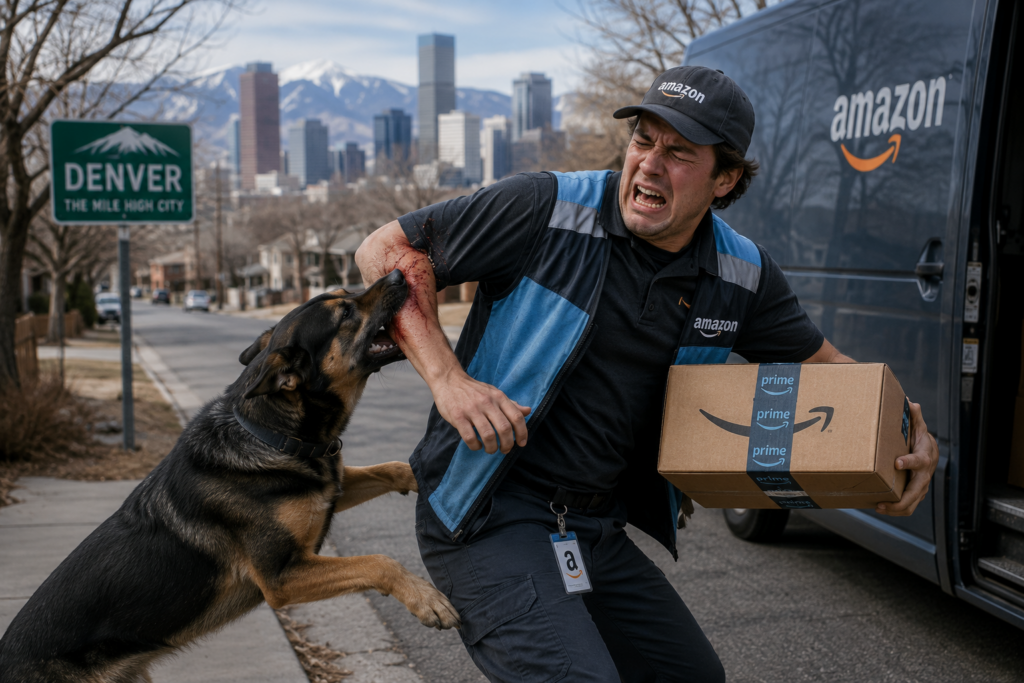
Why Dog Bites Happen In Denver And Why It Matters For Your Claim
Dog bites in Denver often happen in predictable situations. For example, owners let dogs roam off leash in parks or on sidewalks. Sometimes fences fail, gates do not latch, or a dog bolts through a door. In addition, apartment hallway bites happen when a dog squeezes past an owner in a tight common area. Delivery bites also happen when a driver approaches a porch, opens a gate, or turns away after dropping a package. Finally, bites at a friend or family home can catch people off guard, especially when the dog reacts to noise, food, toys, or children running.
Why does the “how and where” matter? Because your legal strategy often depends on it. First, the location can determine whether strict liability applies, or whether you must prove negligence or premises liability. Next, the facts can identify who else may share responsibility, such as a property owner who knew about a broken fence or a landlord who ignored dangerous conditions in a common area. Therefore, early fact gathering can change the strength and value of a claim.
Public health context matters too. The Centers for Disease Control and Prevention reports that millions of Americans suffer dog bites each year, and a significant number require medical treatment. In addition, bites can lead to infection, scarring, and other complications, so prompt medical care and documentation matter for health and for a claim.
Denver reporting can also shape the case. Animal control involvement, vaccination verification, and an official report can confirm key details later. However, many people skip reporting because they want to “keep the peace,” and that decision can hurt the claim if the owner later denies what happened. Therefore, documentation is not just paperwork, it is leverage. Next, you need to understand injuries and treatment, because medical records usually drive damages.
Common Dog Bite Injuries And Medical Treatment Steps
Dog bites can cause more than a surface wound. Common injuries include:
- Puncture wounds and deep tissue damage
- Lacerations that require stitches
- Crushing injuries and torn muscle
- Nerve damage, numbness, and loss of function
- Infections, including serious bacterial infections
- Scarring and disfigurement, especially on the face, arms, and hands
- Psychological harm, including anxiety and fear around dogs
Medical treatment should start immediately. First, get the wound cleaned, either at home for very minor injuries or by a medical professional when the skin breaks or bleeding persists. Next, go to urgent care or an emergency room based on severity, location of the bite, and signs of complications. In addition, doctors may prescribe antibiotics, update tetanus shots, and evaluate rabies risk based on vaccination status and local guidance.
You should also document the wound. Take clear photos as soon as possible, then take follow-up photos as bruising, swelling, and scarring develop. However, do not let photos replace medical care, because treatment creates the records that insurance companies respect.
Follow-up care often matters. You may need wound checks, scar management, physical therapy, or a plastic surgery consultation. In addition, mental health care can be appropriate when the bite causes lasting sleep problems, panic, or changes in daily life. Therefore, consistent care supports both recovery and the value of your claim.
Children need special attention. Bites to the face and hands can cause long-term scarring, growth-related complications, and significant trauma. Next, parents should document changes in behavior and school performance, because these details can support non-economic damages.
What To Do Right After A Dog Bite In Denver
What you do in the first hours and days can shape the entire case. Here is a practical checklist.
Step 1: Get To Safety
First, move away from the dog and get to a secure place. If the dog is still loose, ask someone to call for help.
Step 2: Identify The Dog And Owner
Next, try to identify the dog and the owner or handler. Get names, phone numbers, and addresses. In addition, ask for vaccination information and the dog’s veterinarian if available. If the owner refuses, write down a physical description and any license tag information.
Step 3: Document The Scene
Then, take photos and video. Capture injuries, the dog, the leash or lack of leash, open gates, broken fences, warning signs, and the surrounding area. Also photograph torn clothing, blood, and personal items. Therefore, you preserve evidence before it changes.
Step 4: File A Report
Create an official record. You may file a police report for a dog bite in Denver, and you can also contact animal control to document the incident and confirm vaccination status. However, report options depend on the situation, so if you are unsure, document what you can and ask a lawyer for guidance on the best reporting route.
Step 5: Avoid Common Insurance Mistakes
Insurance adjusters may call quickly. Do not give a recorded statement before you understand your rights. In addition, do not accept a fast, low offer just to “close it out,” especially before you know whether infection, scarring, or nerve damage will develop. Therefore, you protect your ability to seek full compensation.
Next, you need to understand Colorado law, because liability rules determine what you must prove.
Colorado Dog Bite Laws That Apply In Denver
Colorado dog owner laws come from Colorado Revised Statutes and related Colorado law. In plain language, Colorado uses different paths to liability depending on the circumstances and the severity of injuries.
Strict Liability For Serious Bodily Injury
Colorado has a strict liability rule for dog bites that cause serious bodily injury in certain settings. If it applies, you typically do not need to prove the owner acted carelessly. Instead, you focus on whether the dog caused the injury, whether the injury qualifies as serious bodily injury, and whether you were on public property or lawfully on private property.
Strict liability can simplify a claim. However, it does not eliminate every defense, and the injury classification and facts still matter. Therefore, legal guidance helps you place the case under the correct rule early.
Premises Liability And Negligence Concepts
Many dog bite cases also involve premises liability principles, especially when the bite happens on private property. Your status matters. For example, an invited guest or lawful visitor generally has stronger rights than someone trespassing. In addition, bites in apartment common areas can raise questions about control and notice, including whether a landlord or property manager had relevant knowledge of a dangerous condition.
Dangerous Dog Criminal Statutes And Civil Claims
People often hear about Colorado Revised Statutes 18-9-204.5 in the context of dangerous dogs and criminal consequences. Criminal laws and civil claims can overlap, but they are different. A criminal case focuses on punishment by the state. A civil case focuses on compensating the victim. Therefore, even if criminal charges are not filed, you may still have a civil claim.
However, exemptions and defenses can change the outcome, so you need to understand the most common ones.
When Dog Owners Are Not Liable, Key Exemptions And Defenses
Owners and insurers often raise defenses to reduce or deny payment. Common exemptions and defenses in Colorado dog bite cases include:
- Provocation: The defense may claim the victim teased, hit, or threatened the dog.
- Trespassing: If the victim entered property unlawfully, liability may change under premises liability rules.
- Work-related arguments: Some cases involve job duties and access rules, so the defense may argue the victim assumed a known risk. The details matter, so do not accept a blanket denial.
Colorado also recognizes comparative negligence in many injury contexts. In everyday terms, the defense may argue you contributed to the incident, and they may try to reduce what they pay. Therefore, documentation becomes critical.
Witness statements can counter provocation claims. Photos can show a broken latch or an open gate. In addition, prior complaints can support your version of events. Breed alone does not prove fault. However, prior incidents and owner knowledge can matter for negligence, especially if the owner ignored warnings or failed to control a known risk.
Next, dangerous dog topics matter because prior designation and prior reports can change how a case is evaluated.
Dangerous Dog Rules In Colorado And Denver
A dangerous dog designation in Colorado generally involves prior bites, aggressive behavior, or official determinations after an investigation. The definition can depend on the facts and the history of the animal. In addition, prior reports to animal control can support liability because they can show notice, pattern, and foreseeability.
People also talk about dangerous dog registries. While the details and administration can vary, the concept matters for civil cases because prior documentation can undermine the “we had no idea” defense. Therefore, official records can become powerful evidence.
Leash laws and animal control rules can also support negligence claims. If an owner violates a leash requirement, fails to control the dog, or ignores containment duties, that violation can strengthen your argument that the owner failed reasonable care.
Denver’s history with breed restrictions comes up in many consultations. Denver repealed its pit bull ban, and local breed policies can change over time. However, breed policy debates are separate from civil liability rules, which focus on behavior, control, and knowledge. Therefore, you should keep the case focused on what the dog did and what the owner failed to do.
Next, many victims ask about specific breeds, so it helps to address how courts and insurance companies really look at risk.
Dog Breeds People Ask About And How Courts Actually Look At Risk
People often ask about breeds involved in bite incidents. Commonly discussed breeds include pit bulls, Rottweilers, German Shepherds, American bulldogs, mastiffs, huskies, Akitas, Bullmastiffs, Chow Chows, Doberman Pinschers, Siberian Huskies, American Pit Bull Terriers, American Staffordshire Terriers, and Staffordshire Bull Terriers.
Courts in Colorado civil cases generally focus on conduct and control. They also consider what the owner knew or should have known. Therefore, the key questions stay practical: Was the dog restrained? Did the owner follow local rules? Did the owner know the dog had shown aggression before? Did the owner take reasonable steps to prevent a bite?
Insurance companies sometimes treat certain breeds differently. Some policies have exclusions, higher premiums, or denial attempts based on breed labels. However, coverage issues do not automatically eliminate a claim. They can change which policy applies, who pays, or whether additional parties must be considered. Therefore, a careful coverage review matters early.
Responsible ownership reduces risk. Training, secure fencing, leashing, and supervision protect everyone. In addition, owners should take delivery warnings seriously and use barriers when packages arrive. That said, when an owner fails to control a dog and someone gets hurt, the law can provide a path to compensation.
Next, you need to know how a Denver dog bite claim usually works, because the process feels unfamiliar to most people.
How A Denver Dog Bite Claim Usually Works
A dog bite claim process in Denver typically follows a predictable path.
First: Intake And Early Evidence Review
You share what happened, where it happened, and the scope of injuries. Then the legal team identifies likely insurance coverage and key deadlines.
Then: Investigation And Liability Theory Selection
Next, the case gets built around the right theory, strict liability, negligence, premises liability, or a combination. In addition, the team collects and preserves evidence quickly, because video can disappear and witness memories fade.
In Addition: Damages Calculation
Medical bills, future care needs, lost income, and out-of-pocket costs get documented. However, the claim should also account for pain, suffering, emotional trauma, and disfigurement when supported by records and consistent treatment.
Then: Demand Package And Negotiation
A demand package typically includes medical records, bills, photos, reports, and a clear explanation of liability. Negotiation follows with the insurance adjuster. Therefore, preparation drives leverage.
However: Litigation When Needed
If the insurer refuses to be fair, filing a personal injury lawsuit can move the case forward. Finally, many cases resolve through settlement after litigation begins, but trial readiness improves settlement value.
Insurance Coverage That May Pay For A Dog Bite In Denver
Dog bite claims often involve insurance, not personal checks from the owner. Common coverage sources include:
- Homeowners insurance for bites tied to the insured residence
- Renters insurance when the dog owner rents the home or apartment
- Landlord or property policies in some premises-related scenarios, depending on facts and policy terms
Insurance companies use predictable tactics. They may call quickly, push for a recorded statement, or suggest you do not need more treatment. In addition, they may argue provocation, trespassing, or minimal injury to reduce payment. Therefore, you should treat early insurer contact as a negotiation, not a friendly check-in.
Claim value depends on proof. Strong medical documentation, wage records, and clear photos of scarring support a better settlement position. In addition, future care planning can matter when scarring, nerve injury, or psychological harm persists.
You may also hear about subrogation and medical liens. In simple terms, if a health insurer or medical provider pays bills related to the bite, they may seek reimbursement from any settlement. Therefore, the “headline number” is not always the same as your net recovery, and planning for liens matters.
Next, it helps to understand what compensation may cover.
Compensation In Colorado Dog Bite Cases
Compensation in Colorado dog bite cases often includes economic and non-economic damages. A Denver Dog Bite Lawyer can help you recieve maximum compensation.
Economic Damages
Economic damages are the financial losses you can document, such as:
- Emergency room or urgent care bills
- Follow-up visits and specialist care
- Antibiotics, medications, and medical supplies
- Tetanus and rabies-related evaluation costs
- Plastic surgery consultations and procedures
- Physical therapy or occupational therapy
- Mental health counseling
- Lost wages and reduced earning capacity
Non-Economic Damages
Non-economic damages reflect the human impact, including:
- Pain and suffering
- Emotional trauma and anxiety
- Disfigurement and scarring
- Loss of enjoyment of life
Serious bodily injury can affect strict liability and can increase case value, especially when injuries involve permanent disfigurement, loss of function, or fractures. In addition, facial injuries and visible scarring often require expert support, long-term treatment plans, and careful photo documentation over time.
Next, you must understand deadlines, because missing a time limit can end the case.
Deadlines, The Colorado Statute Of Limitations For Dog Bites
The statute of limitations is the legal deadline to file a lawsuit. If you miss it, the court can dismiss the case even if liability is clear. Therefore, acting early protects your rights and your evidence, even if the deadline feels far away.
People often search for the statute of limitations dog bite claim Colorado and the dog bite claim time limit Colorado. The correct deadline can depend on the legal theory, the parties involved, and specific facts. In addition, claims connected to government property or public entities can involve extra notice rules and shorter timeframes. Therefore, confirm deadlines with a lawyer as soon as possible.
Parents should also act quickly when a child is bitten. Even if certain timing rules extend for minors, early action preserves evidence, improves medical documentation, and reduces insurer manipulation.
Next, here is how Denver Personal Injury Lawyers® builds a strong case so you do not have to manage everything alone.
How Denver Personal Injury Lawyers® Builds A Strong Dog Bite Case
Denver Personal Injury Lawyers® builds dog bite cases with a focused, evidence-first approach.
First, the team gathers reports, medical records, and photographs. Next, they interview witnesses and request relevant documentation, including vaccination records when available. In addition, they work to preserve video quickly, such as doorbell cameras, apartment security footage, or nearby business surveillance.
Then the team selects the right legal theory, strict liability, negligence, premises liability, or a combination, based on injuries and location. However, they also anticipate defenses early, such as provocation claims or trespassing arguments, and they build evidence to counter them.
Denver Personal Injury Lawyers® handles insurance company communications, demand letters, negotiation, and litigation if needed. Therefore, you avoid common pitfalls like recorded statements that get taken out of context or rushed settlements before your prognosis is clear.
The team can also support treatment documentation. In addition, they can help you understand what records matter for future costs, scarring, and long-term care planning. Clients receive clear updates in plain language, and the firm prepares every case with trial readiness, because fair settlements often require real leverage.
Choosing The Right Denver Dog Bite Lawyers For Your Case
Not all personal injury representation is the same. Use this checklist when evaluating Denver Dog Bite Lawyers.
What To Look For
- Experience with dog bite liability in Denver
- Strong knowledge of Colorado dog bite laws and defenses
- Comfort handling strict liability versus negligence and premises liability claims
- A clear plan for proving damages, including scarring and emotional harm
- Willingness to litigate if the insurer stays unreasonable
Questions To Ask In A Consultation
- Who will handle my case day to day?
- How do costs work, and what happens if there is no recovery?
- How often will you update me, and how will we communicate?
- What evidence do you need from me right now?
- What timeline should I expect based on my injuries and treatment plan?
Red Flags
Avoid firms that guarantee outcomes, pressure you to settle fast, or cannot explain how they build trial-ready cases. In addition, be cautious if the lawyer cannot clearly explain which legal theory fits your facts.
What To Bring
Bring photos, medical records, report numbers (police or animal control), wage information, and witness contacts. Therefore, the attorney can evaluate liability and damages accurately from day one.
Next, here is the practical path forward.
Next Steps After A Denver Dog Bite
First, get medical care and follow through with treatment. Next, report the bite and document everything, including photos, witness contacts, and vaccination information if available. Then talk with Denver Dog Bite Lawyers about your options under Colorado law.
If you want help now, contact Denver Personal Injury Lawyers® for a free consultation and case evaluation. There is no obligation. In addition, you do not pay attorney’s fees unless there is a recovery, so you can focus on healing while the legal team deals with the insurance company.
Schedule a free consultation with Denver Personal Injury Lawyers® to discuss Colorado dog bite laws, liability, and compensation options based on your specific facts.
FAQs (Frequently Asked Questions)
What should I do immediately after a dog bite incident in Denver?
First, get to safety by moving away from the dog. Then, try to identify the dog and its owner by obtaining names, contact information, and vaccination details. Document the scene with photos and videos of injuries, the dog, surroundings, and any relevant evidence. File an official report with police or animal control to create a record of the incident. Avoid common insurance mistakes by consulting a lawyer early.
How do Colorado dog bite laws affect my claim in Denver?
Colorado law can impose strict liability or require proof of negligence or premises liability depending on where and how the bite occurred. The location of the bite—such as a public sidewalk, apartment hallway, or private property—can determine legal responsibility. Early fact gathering helps identify all responsible parties, like property owners or landlords who ignored hazards, impacting the strength and value of your claim.
What types of injuries are common from dog bites and how should they be treated?
Common injuries include puncture wounds, lacerations needing stitches, crushing injuries, nerve damage, infections, scarring, and psychological harm like anxiety. Immediate medical treatment is crucial: clean wounds promptly; seek urgent care for serious bites; follow doctors’ advice regarding antibiotics, tetanus shots, and rabies evaluation; document wounds with photos; and attend follow-up care such as physical therapy or mental health support.
Who can Denver Dog Bite Lawyers assist after a dog bite incident?
Denver Dog Bite Lawyers assist adults bitten by dogs, parents of bitten children, delivery drivers (including Amazon), postal workers, renters, visitors, and anyone lawfully present who suffered an attack on sidewalks, apartment hallways, private property, or friends’ homes. They help protect health, finances, and legal rights by guiding through Colorado laws and insurance claims.
What is a contingency fee arrangement with Denver Personal Injury Lawyers®?
A contingency fee means you pay no attorney’s fees unless your case results in a recovery. This allows you to access legal help without upfront costs—a critical factor when facing urgent medical bills or lost wages after a dog bite injury.
Why is reporting a dog bite to authorities important in Denver?
Reporting to police or animal control creates an official record that verifies key details like vaccination status and circumstances of the bite. This documentation supports your claim later if the owner denies the incident. Skipping reporting to “keep the peace” can weaken your case since evidence might be harder to prove without official records.
